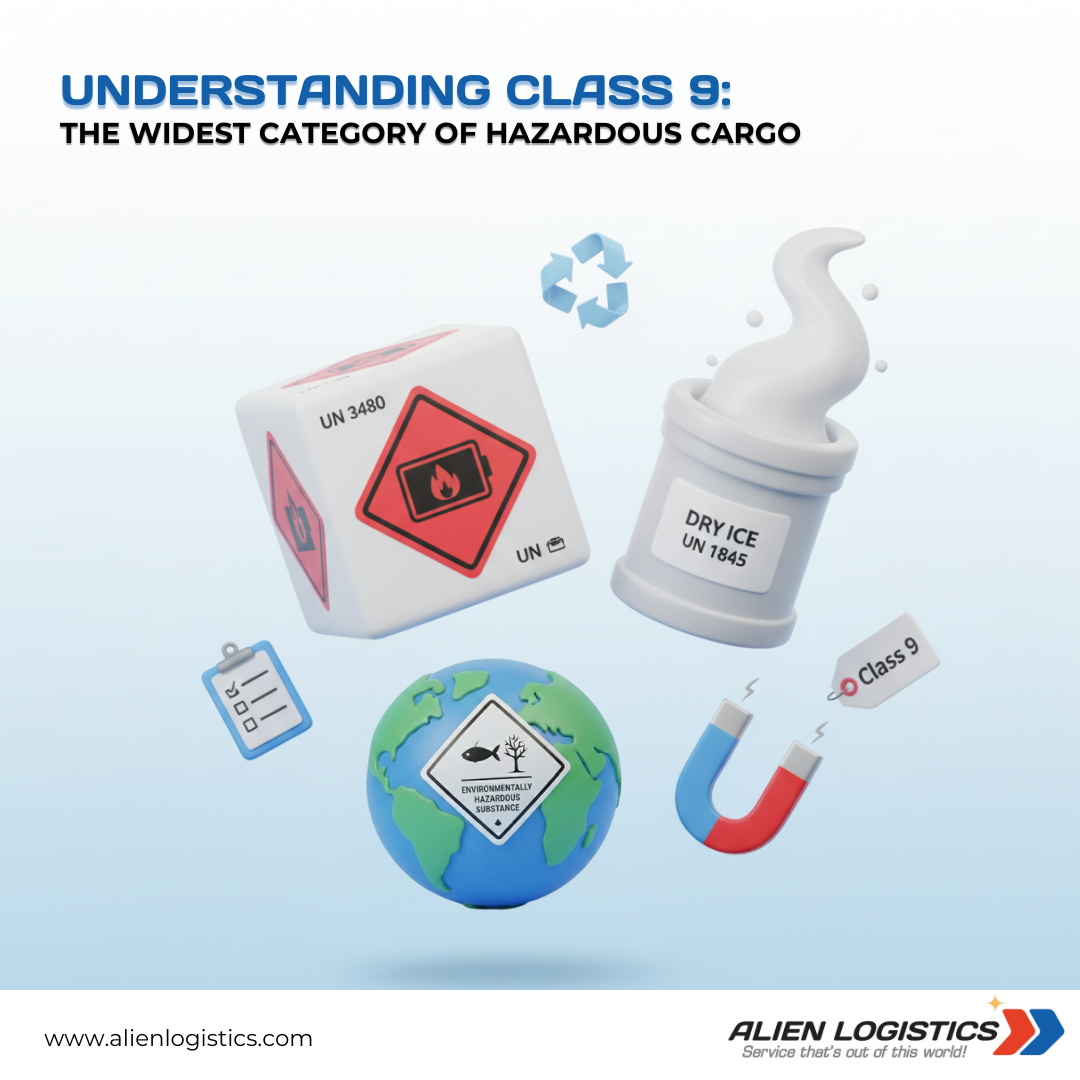
The Widest Category of Hazardous Cargo
When people think of dangerous goods, they often imagine flammable liquids or toxic chemicals. Introducing one of the most diverse categories under the UN classification of dangerous goods, the Class 9 – Miscellaneous Dangerous Substances and Articles.
For logistics professionals, freight forwarders, and exporters, understanding Class 9 is essential — especially as global trade increasingly depends on the transport of electronic devices, batteries, and environmentally hazardous materials.
What Is Class 9 Dangerous Goods?
Class 9 Dangerous Goods are substances or articles that present a hazard not covered by Classes 1 to 8 (which include explosives, gases, flammable liquids, corrosives, etc.). In other words, Class 9 is the “catch-all” group for items that pose risks to health, safety, property, or the environment but do not fit neatly into other categories.
The UN Model Regulations define Class 9 as “miscellaneous dangerous substances and articles which, during transport, present a danger not covered by other classes.”
Typical hazards can include:
- Environmental harm (e.g., pollutants that affect marine life or ecosystems)
- Elevated temperature (materials transported hot enough to cause burns)
- Electromagnetic interference (magnetised materials that affect aircraft instruments)
- Chemical instability or self-reactive behaviour under specific conditions
For companies like Alien Logistics, understanding this classification plays a pivotal role in ensuring compliance, safe packaging, and international shipping approvals across air, sea, and land modes.
Why Class 9 Matters in Global Logistics
Even though it is labelled “miscellaneous,” Class 9 includes some of the most frequently transported goods in modern supply chains — from consumer electronics to pharmaceuticals. With the growth of e-commerce and renewable energy industries, the volume of Class 9 cargo has skyrocketed worldwide.
Misclassification or mishandling can result in costly delays, shipment rejections, or regulatory penalties under IATA, IMDG, or ADR frameworks.
That is why logistics partners such as Alien Logistics provide specialised consultation, documentation advice and packaging solutions to help exporters stay compliant.
Common Examples of Class 9 Dangerous Goods
Here are some of the most common items you will find under Class 9 — and why they require special handling.
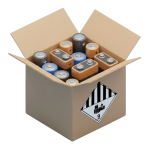
1. Lithium Batteries (UN 3480 / 3481 / 3090 / 3091)
Used in smartphones, laptops, electric vehicles, and power tools, lithium batteries are a major Class 9 category due to their fire risk when damaged or short-circuited.
Air transport of lithium batteries is especially regulated under IATA DGR, requiring specific UN-approved packaging, charge limits, and hazard labels.
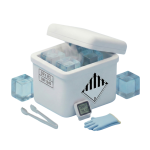
2. Dry Ice (Solid Carbon Dioxide – UN 1845)
Dry ice sublimates into CO₂ gas, which can displace oxygen in confined spaces — a hazard for air cargo. It is commonly used in the pharmaceutical and perishable-goods industries for temperature-controlled shipping.
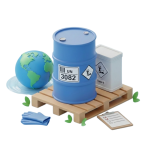
3. Environmentally Hazardous Substances (UN 3077 / 3082)
These substances may not be toxic to humans but are harmful to aquatic life. They include certain paints, resins, and chemical mixtures that require the “dead fish and tree” marine pollutant symbol when shipped by sea.

4. Magnetised Materials (UN 2807 / 2808)
Strong magnets, loudspeakers, or electrical components can interfere with aircraft navigation systems. Such cargo must be tested and declared as Class 9, often requiring distance buffers or shielding during air transport.
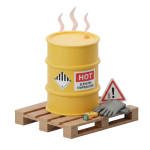
5. Elevated-Temperature Substances
Materials transported at high temperatures — such as molten asphalt or bitumen — can cause burns and are therefore classified under Class 9, demanding insulated or heat-resistant containers.
Packaging, Labelling, and Documentation Requirements
Even though the hazards vary, Class 9 shipments must comply with strict UN packaging standards and labelling regulations:
- UN marking (e.g., UN 3480, UN 3077)
- Class 9 hazard label – black stripes on white background (for lithium batteries, a battery-and-flame symbol is used)
- Environmental hazard label – required for marine pollutants
- Proper Shipping Name (PSN) and packing group on the Shipper’s Declaration
- Safety Data Sheet which contains information on handling, documenting, and segregating Class 9 cargo
Alien Logistics provides end-to-end support — from classification advice and packaging solutions to consultation on DG documentation and carrier approval — ensuring your shipment moves smoothly through customs and transport checkpoints.

Real-World Impact: Why Expertise Matters
In 2024, over 70 % of air cargo incidents involving dangerous goods were linked to improperly declared lithium batteries. [Can share about the recent accidents at sea which can cost more than USD1billion when a ship and surrounding areas are affected]
A single misstep in labelling or packaging can lead to rejected shipments, fines, or even flight diversions.
By partnering with a DG-certified freight forwarder like Alien Logistics, businesses gain:
- Peace of mind that cargo meets IATA / IMDG / ADR standards
- Reduced compliance risks and insurance costs
- Access to trained DG handlers and approved packaging materials
- Simplified export documentation for multiple destinations
Conclusion
Class 9 Dangerous Goods may be “miscellaneous” in name, but they are central to the global movement of technology, medicine, and sustainable products.
With increasing regulatory scrutiny — particularly for lithium batteries and environmental pollutants — choosing the right logistics partner makes all the difference.
At Alien Logistics, safety, compliance, and sustainability go hand in hand.
From accurate classification to global delivery, we ensure every shipment meets international DG standards — so your business stays compliant, efficient, and trusted worldwide.
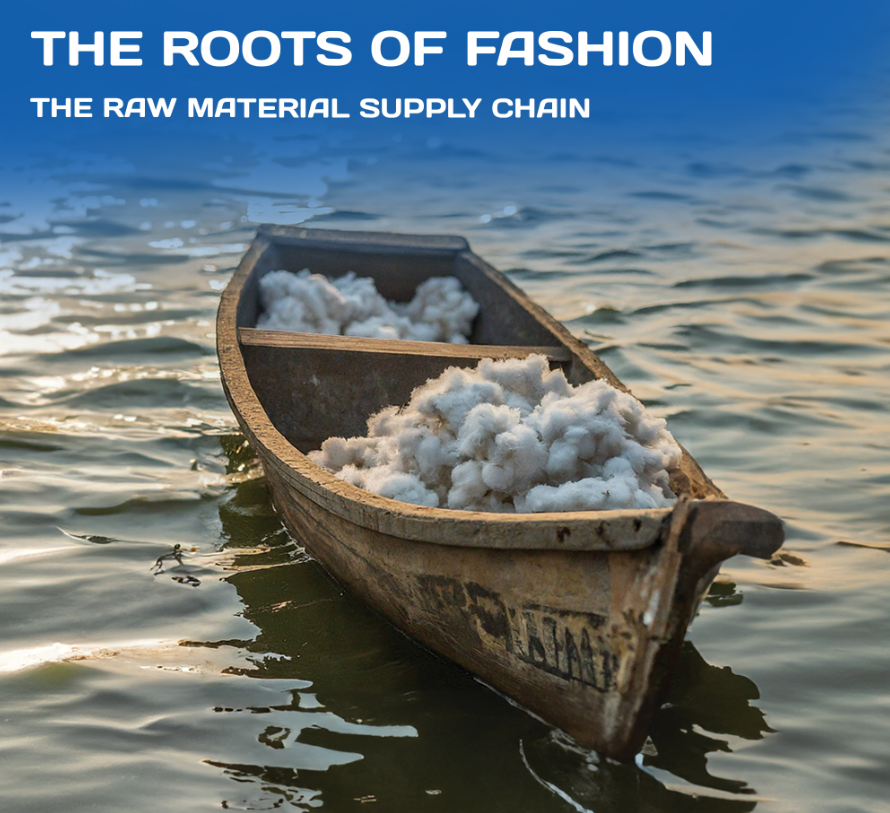
The Roots Of Fashion
From the cotton fields of India, Africa and America to the synthetic fibre labs of Europe and China,

Factory To Store
After manufacturing, the journey of your garment continues with Alien Logistics as we collaborate wi
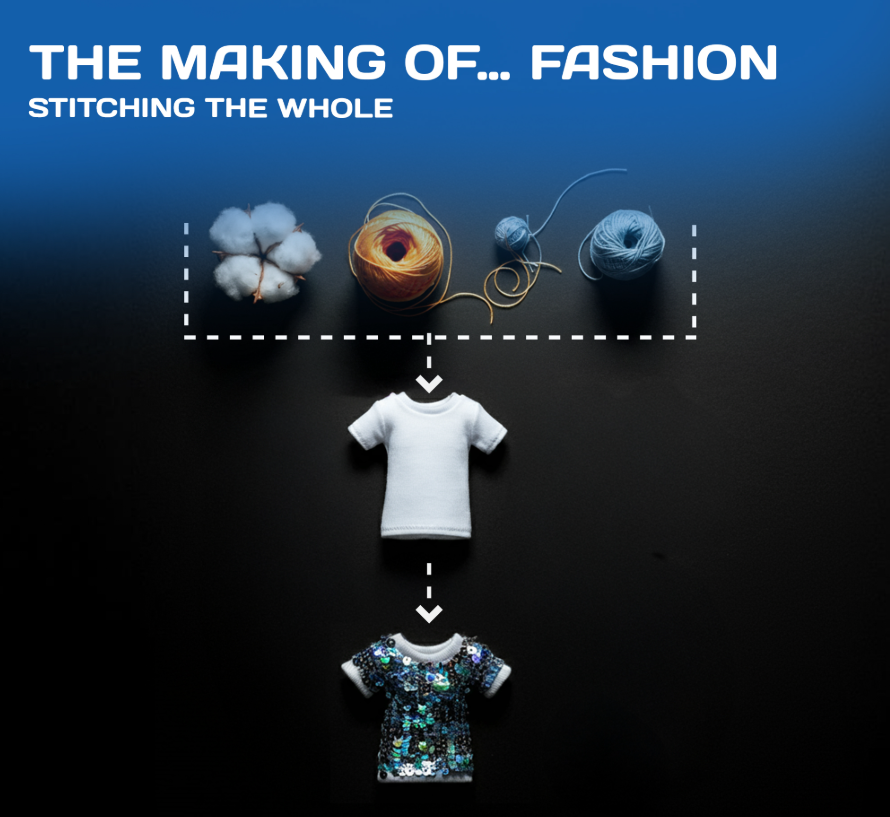
The Making Of… Fashion
Did you know, a single garment could pass through up to five countries from its raw form as cotton b