Why Perfume Is Classified as Dangerous Goods (And Soda Isn’t)
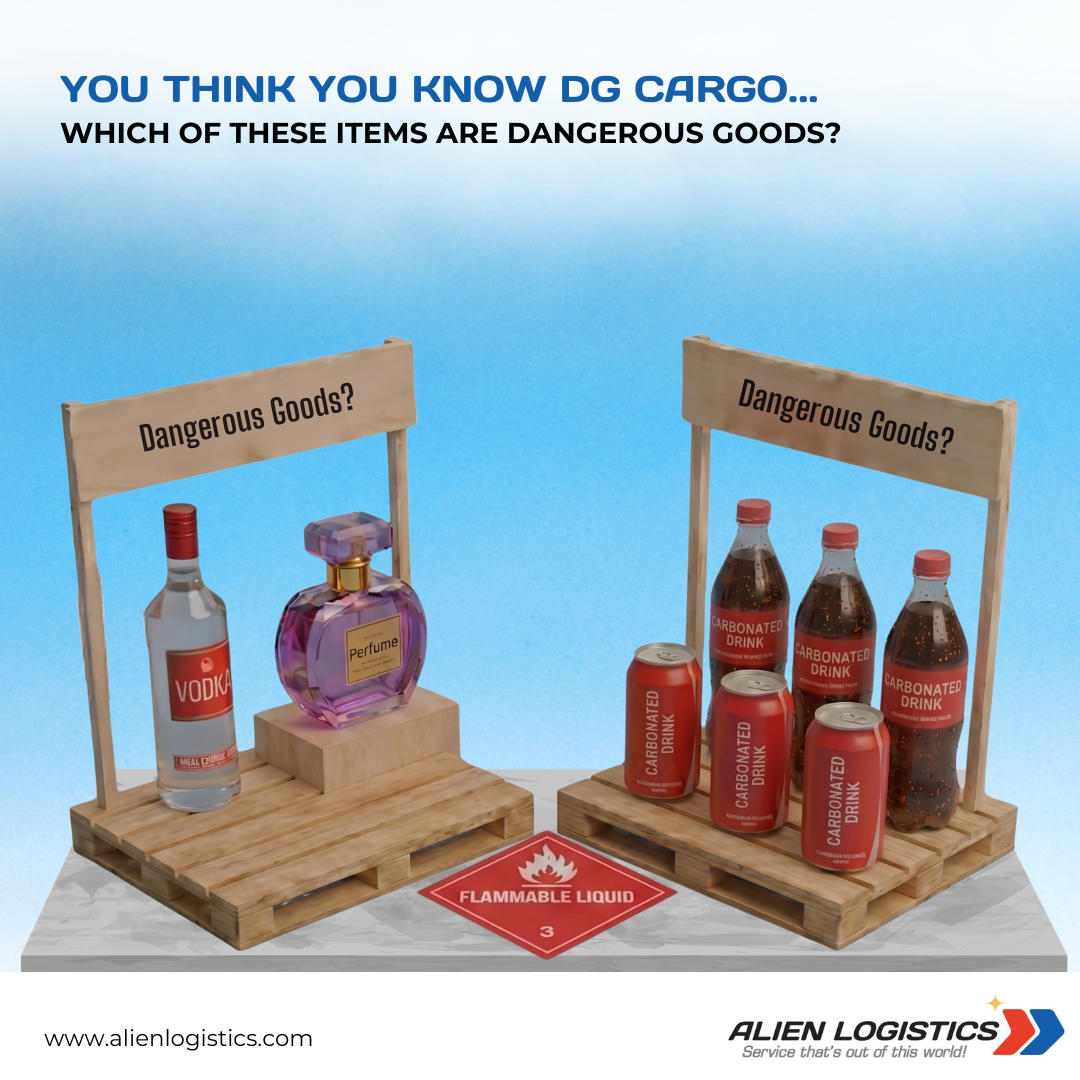
What do vodka, perfume, and essential oils have in common? 🍸💄🌿
At first glance… not much.
One belongs at a dinner table, one on your dressing table, and one somewhere in your “self-care” routine.
But in logistics?
They’re all classified under Class 3 Dangerous Goods — flammable liquids.
Which means during transport, they’re handled a lot more carefully than you’d expect.
Wait… perfume is considered Dangerous Goods?
Sounds a bit dramatic — but there’s a solid reason behind it.
Most perfumes, alcohol, and even some essential oils contain ingredients that:
- Evaporate easily
- Release flammable vapours
- Can ignite under certain conditions
In logistics terms, these fall under flammable liquids (Class 3 Dangerous Goods) — and that’s what determines how they’re shipped.
🔍 What Is Class 3 Dangerous Goods?
In simple terms, Class 3 Dangerous Goods are liquids that can catch fire easily during transport.
This classification is used globally under regulations such as:
- Air freight: IATA Dangerous Goods Regulations
- Sea freight: IMDG Code
- Land freight: ADR Regulations
Common examples include:
- Perfume and cosmetics with alcohol
- Alcoholic beverages (like vodka)
- Essential oils
- Paints and solvents
So yes — that bottle of perfume you ordered online?
From a logistics point of view, it’s treated as regulated cargo, not just a lifestyle product.
Now here’s the twist 👀
Carbonated drinks.
You’ve probably seen videos of people using them to clean rust, coins… even toilets.
Feels like it should be classified as something hazardous, right?
But in logistics?
Nope. Completely fine.
Why carbonated drinks are NOT dangerous goods
Even though they’re slightly acidic and can build up pressure (and potentially burst during transit), carbonated drinks are not classified as dangerous goods.
Why?
- Don’t produce flammable vapours
- Don’t pose ignition risks
- Are classified as food products, not hazardous materials
Therefore from a shipping perspective they are classified as non-hazardous or general goods — and they don’t fall under dangerous goods regulations.
So… what actually determines if something is “dangerous”?
It comes down to one key idea:
Logistics doesn’t judge by appearance — it judges by behaviour.
Specifically:
- Can it catch fire?
- Can it explode?
- Can it react under pressure or heat?
That’s why:
- A bottle of perfume needs special handling
- But a bottle of soda doesn’t
What this means for businesses (especially in Malaysia & ASEAN)
Here’s where it gets real.
A lot of businesses — especially in:
- Beauty & cosmetics (including nail polish)
- Wellness products
- E-commerce
- Alcohol distribution
…are already dealing with Dangerous Goods shipping without realising it.
And when it’s not handled properly?
You might run into:
- Delays at customs
- Rejected shipments
- Extra checks or inspections
Nothing dramatic — just enough to slow things down and create unnecessary friction.
What goes into shipping Class 3 Dangerous Goods
It’s not complicated — but it does need to be done properly.
Typically, it involves:
- Correct packaging (designed for flammable liquids)
- Hazard labels (the flammable symbol 🔥)
- Proper documentation — including a completed Dangerous Goods Declaration and the Material Safety Data Sheet (MSDS) for accurate classification and handling.
- Handling by trained personnel
Once these are in place, shipments move smoothly.
Final thought 💭
Sometimes the most “normal” products…
Are the ones that need the most attention behind the scenes.
And sometimes the things that look intense?
Are actually completely safe to ship.
Funny how that works.
FAQ (Quick Answers)
Is perfume considered Dangerous Goods?
Yes. Due to its alcohol content, perfume is classified under Class 3 flammable liquids and requires proper handling during shipping.
Can alcohol be shipped internationally?
Yes, but it must comply with dangerous goods regulations such as IATA (air) or IMDG (sea).
Are essential oils dangerous goods?
Some are — especially those with flammable properties. Classification depends on composition.
Not sure about your product?
That’s usually where most people get stuck.
At Alien Logistics, we help businesses across Malaysia and the region:
- Check if a product falls under Dangerous Goods
- Handle the required documentation
- Make sure shipments move without unnecessary delays
Because honestly — it’s much easier to get it right at the start than fix it halfway through 🚛
Connecting You to Trusted Suppliers
Finding the right supplier is more than just getting the right price—it’s about trust, reliabili
Efficient and Reliable Deliveries
In the fast-paced fashion industry, getting products from warehouses to your customers’ hands is m
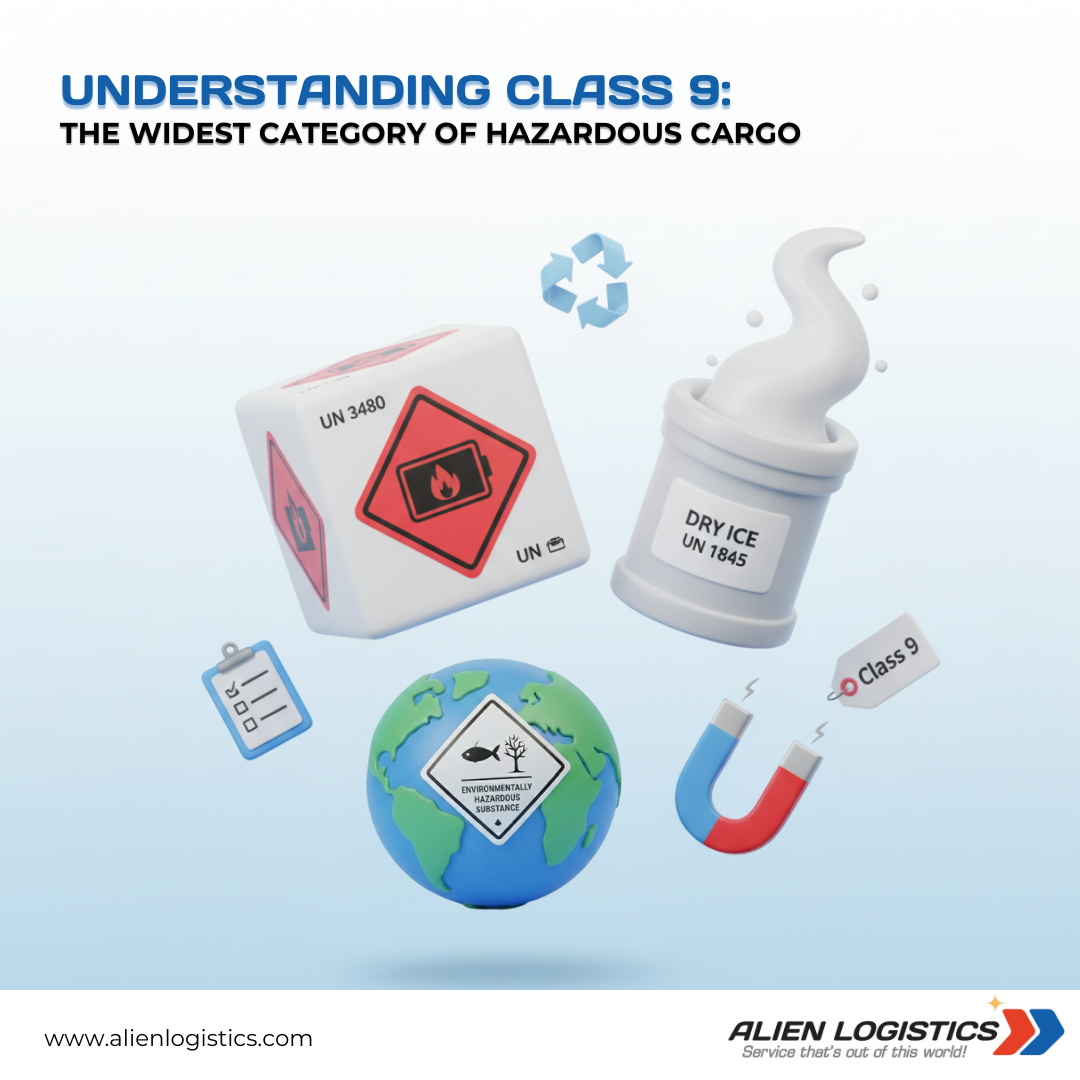
The Widest Category of Hazardous Cargo
When people think of dangerous goods, they often imagine flammable liquids or toxic chemicals. Intro