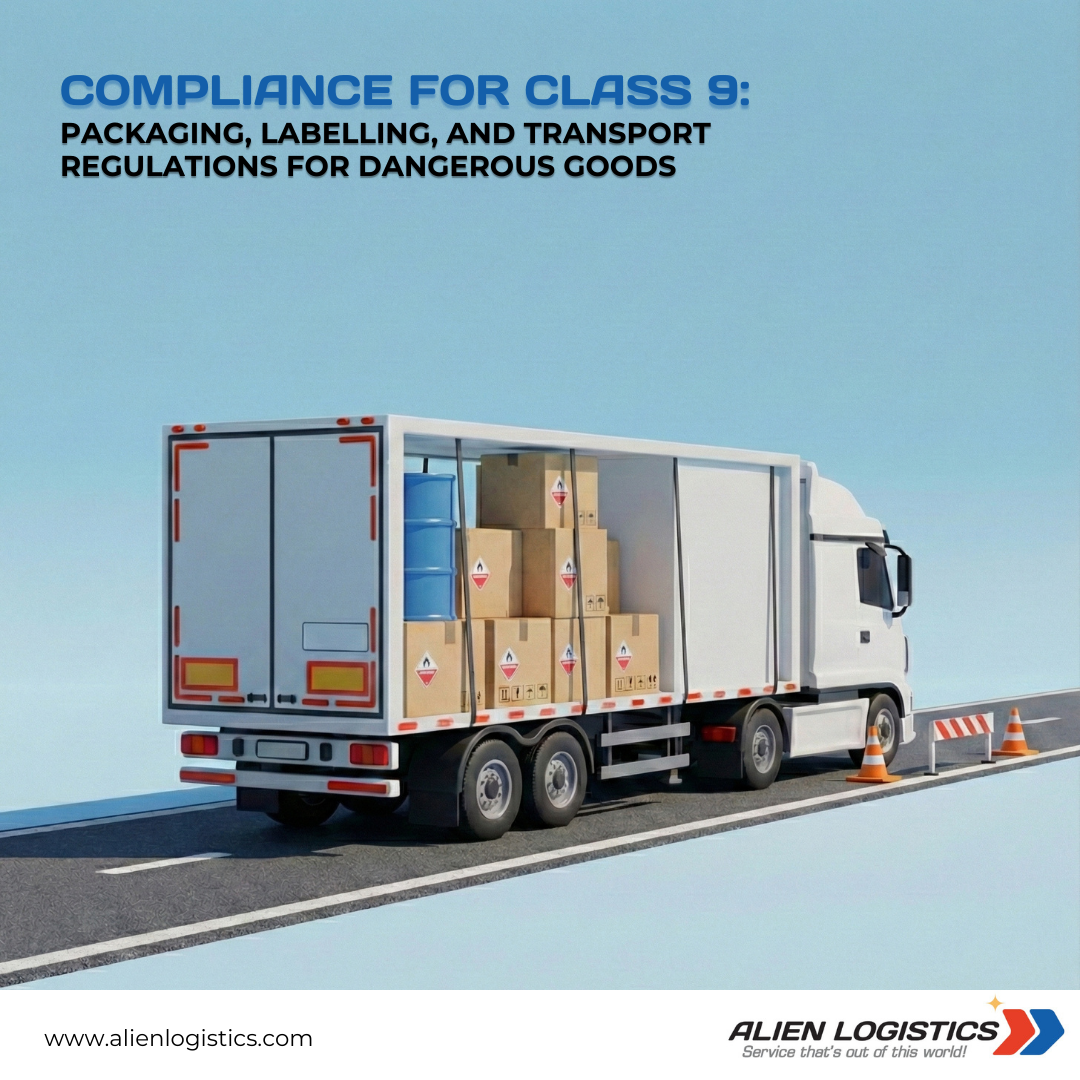
Compliance For Class 9
When it comes to shipping Class 9 Dangerous Goods, safety doesn’t start when the truck engine turns on or the plane takes off.
It starts way earlier — at the packing table, with labels in hand and regulations open (yes, the boring part… but stay with us).
At Alien Logistics, we make sense of these rules so you don’t have to lose sleep, hair, or shipments over them.
Because Class 9 goods?
They’re a little… different.
What Exactly Are Class 9 Dangerous Goods?
Think of Class 9 as the miscellaneous drawer of dangerous goods — the place where all the “doesn’t quite fit anywhere else but still risky” items live.
This category includes things like:
- 🔋 Lithium batteries
- ❄️ Dry ice (cold, but dangerous cold)
- 🧲 Magnetised materials
- 🐟🌳 Environmentally hazardous substances
- 🔥 Elevated-temperature goods
They don’t all behave the same — which means one-size-fits-all rules don’t apply. Packaging, labels, and handling change depending on what you’re shipping and how you’re shipping it.

Packaging & Labelling: The Outfit Your Cargo Must Wear
If Class 9 goods were going out in public, packaging and labelling would be their safety outfit.
Get it right, and everyone stays calm.
Get it wrong… and things get messy fast.
📦 1. UN-Approved Packaging (No DIY Allowed)
Class 9 goods must be packed in UN-certified packaging — tested for drops, leaks, and general “oops” moments.
What that means:
- Packaging codes like 4G (for cartons) and 1A2 (for steel drums) aren’t random — they tell inspectors exactly what they’re looking at
- Inner packaging is often required (especially for lithium batteries) to prevent short-circuit drama
- Durability isn’t optional — it’s mandatory
In short: if it’s not UN-approved, it’s not going anywhere.
🏷️ 2. Labels That Talk (So Authorities Don’t Have To Guess)
Every Class 9 shipment needs clear, visible labels — on all sides — because no one likes surprises when it comes to hazardous cargo.
You’ll typically need:
| Label Type | Description | Purpose |
| Class 9 Hazard Label | White with black diagonal stripes | Identifies miscellaneous hazardous materials |
| Lithium Battery Label (IATA) | Fire icon included, because lithium batteries don’t whisper when something goes wrong | Warns of potential fire risk in lithium batteries |
| Environmentally Hazardous Substance Label | “Dead Fish & Tree” pictogram | Required for substances harmful to aquatic life |
| UN Number & Proper Shipping Name | e.g., UN 3480, Lithium Ion Batteries | Must be clearly legible next to the label |
| Orientation Arrows | For liquid or temperature-sensitive materials | Ensures correct handling direction |
At Alien Logistics, we work alongside senders to advise on labelling requirements under IATA, IMDG, and ADR, helping ensure shipments move through customs without unnecessary delays.

Same Goods, Different Rules: Road vs Sea vs Air 🚚🚢✈️
Here’s where it gets interesting.
The cargo may be the same, but certain requirements change depending on the mode of transport.

🚛 Road Transport (ADR / Regional Regulations)
Road transport follows frameworks like ADR (Europe) or ASEAN DG protocols.
Expect requirements like:
- Truck placards showing Class 9 symbols and UN numbers
- Certified DG drivers with emergency response documents
- Segregation rules (some goods simply refuse to travel together)
Basically: everyone on the road needs to know what’s inside — just in case.
🚢 Sea Transport (IMDG Code)
Shipping by sea? Welcome to the IMDG rulebook.
Key things to know:
- Marine pollutants (UN 3077 / UN 3082) must carry environmental hazard marks
- Containers need Class 9 placards on all four sides
- Certain goods require special stowage or ventilation
- Elevated-temperature items need extra attention — ships get hot enough already

✈️ Air Transport (IATA DGR)
Air is where regulations put on their no-nonsense face.
Under IATA DGR:
- Lithium batteries have strict limits on watt-hours, insulation, and charge levels
- Some batteries are banned on passenger aircraft altogether
- Every shipment needs a Shipper’s Declaration for Dangerous Goods
- Pre-flight inspections are non-negotiable
And yes — every DG shipment must come with a valid SDS/MSDS (Material Safety Data Sheet) so everyone knows what they’re dealing with.
Why Compliance Matters
Because mistakes here aren’t small.
Incorrect packaging or labelling can mean:
- ❌ Shipment rejection
- 💸 Heavy fines
- 📄 Insurance becoming “invalid”
- ⏳ Costly delays across your supply chain
Not fun. Not cheap. Definitely not worth the risk.
Why Businesses Choose Alien Logistics 👽
We handle the serious stuff — together with you — so nothing gets missed when it comes to Dangerous Goods compliance.
✅ DG specialists trained in IATA, IMDG & ADR
✅ UN-certified packaging & inspection services
✅ Constant updates on regulatory changes
✅ Smooth customs clearance (no awkward explanations required)
Final Thought
Class 9 Dangerous Goods may be the rebels of the DG world — but shipping them doesn’t have to be stressful.
With the right packaging, clear labelling, and mode-specific compliance, your cargo can move safely, legally, and without drama.
Because when it comes to dangerous goods, responsibility starts with you — and peace of mind comes from having the right logistics partner by your side 😉
Come, talktome@alienlogistics.com we’re always ready to help.
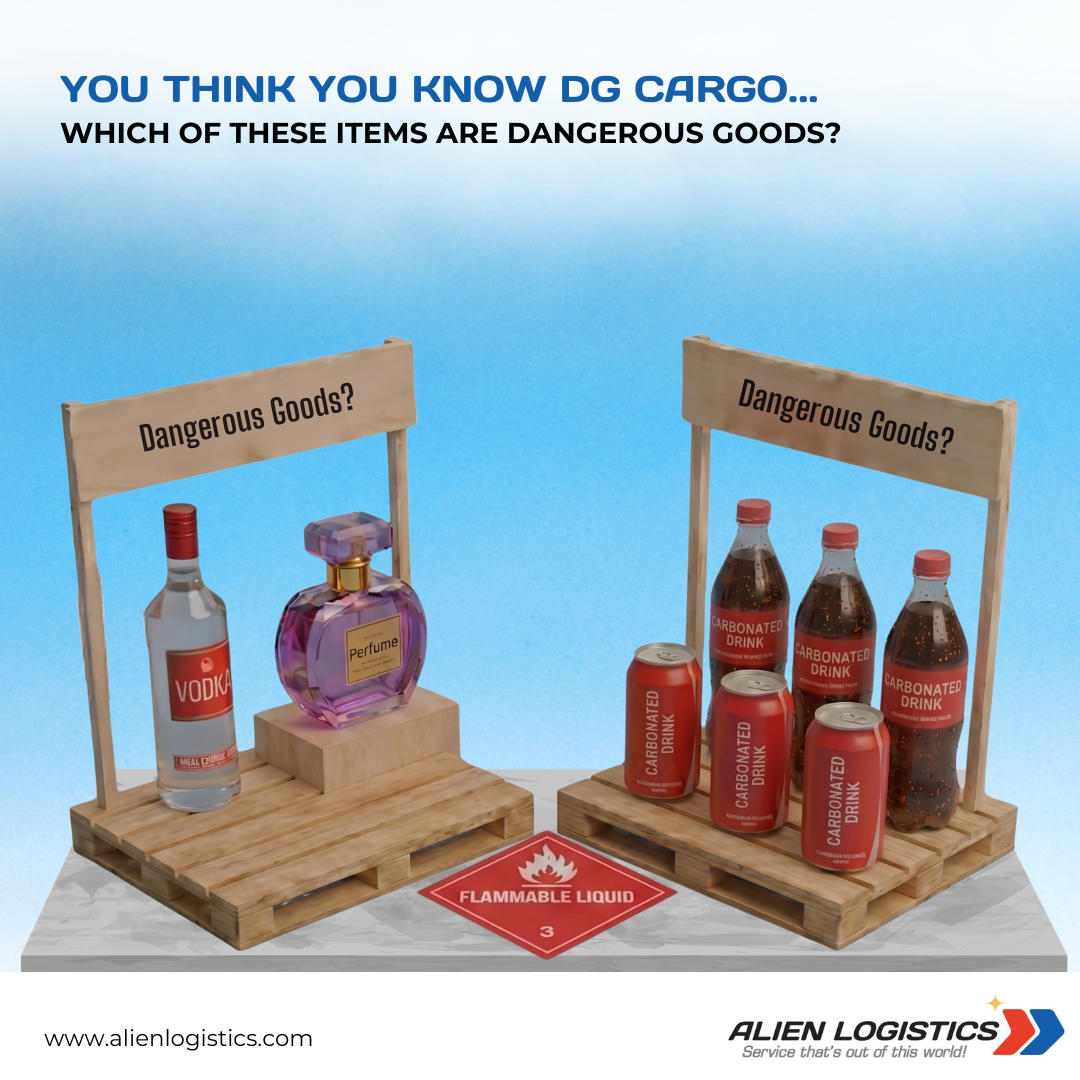
Why Perfume Is Classified as Dangerous Goods (And Soda Isn’t)
What do vodka, perfume, and essential oils have in common? 🍸💄🌿 At first glance… not much.

Fast Fashion, Faster Logistics
In the high-stakes world of fashion logistics, where a delayed shipment can turn a “hot trend” i
Efficient and Reliable Deliveries
In the fast-paced fashion industry, getting products from warehouses to your customers’ hands is m